Unlock the full potential of your solar investment.
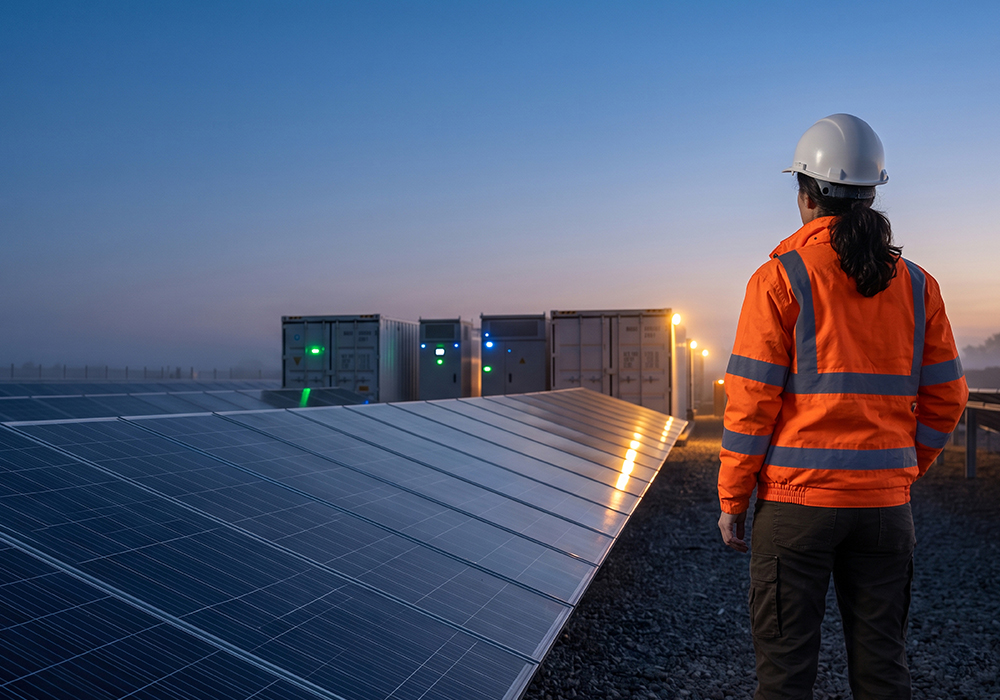
Battery storage transforms your solar installation into a fully optimised, resilient energy ecosystem, giving you independence from volatile energy tariffs, protection from grid instability, and the ability to use your solar power on your terms.
Our team bring the expertise, engineering capability and data intelligence needed to design the right battery system for your business.
When a site is billed on different day and night (or peak and off-peak) rates, a battery system can take advantage of the cheaper nighttime electricity by charging then, and later supplying power during the day to avoid buying energy at the higher peak rate.
A method of managing electricity use to minimise exposure to high grid prices. This might involve charging during off-peak periods or programming the battery to discharge when electricity costs are at their highest, such as during red-band DUoS periods.
Reducing the power taken from the grid by discharging the battery during high-demand periods, helping a site avoid peak demand charges or breaching its agreed supply capacity
Essential circuits can be supported by the battery, ensuring they continue to run during a power outage. This helps avoid downtime and the operational losses that come with it.
Battery systems can also earn income by taking part in various energy markets. Opportunities include services such as the Capacity Market, Demand Flexibility schemes, Frequency Response, and Constraint Management, among others.
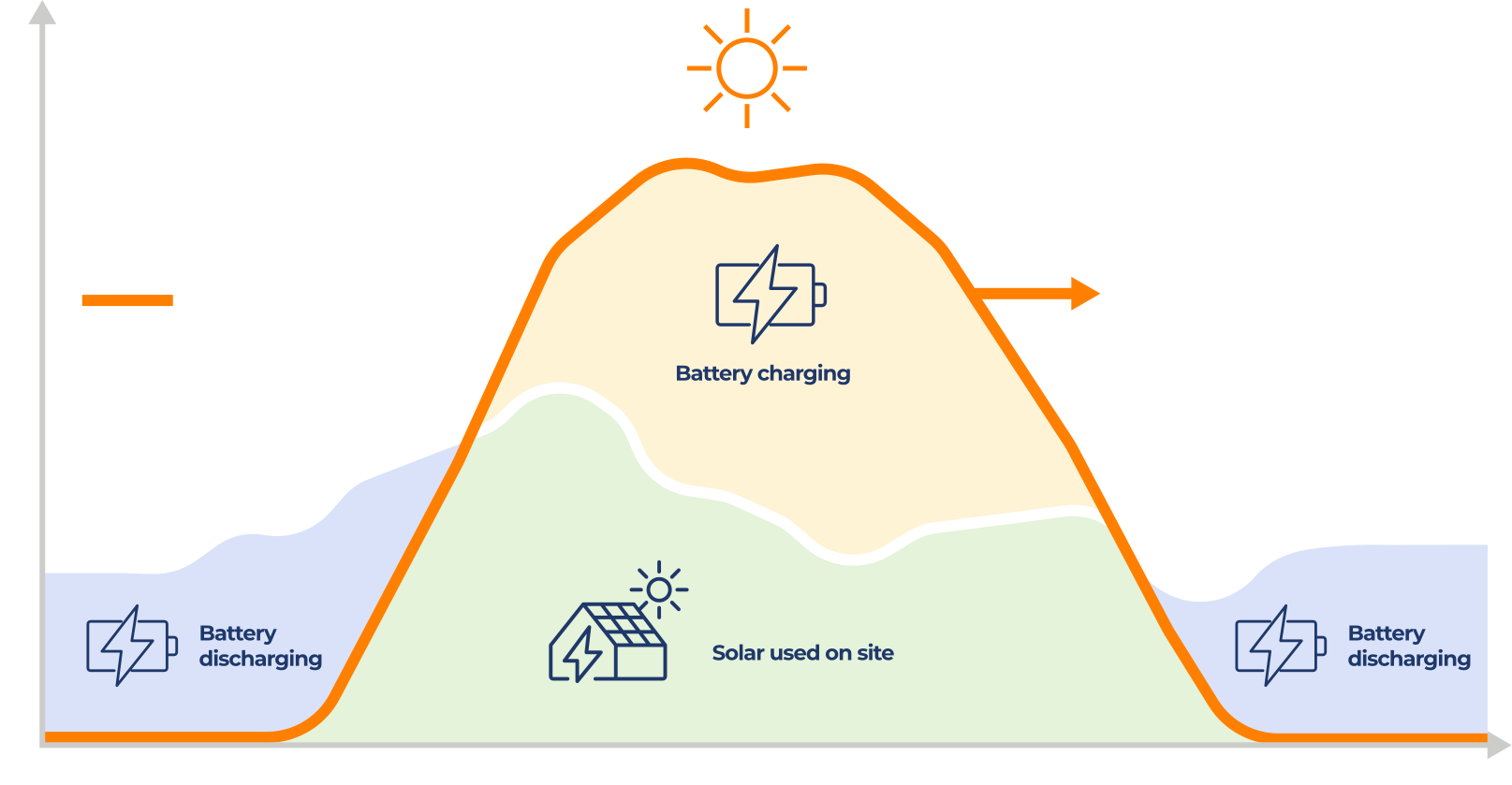
Pairing a battery with a renewable generation system enables a site to use more of the energy it produces. This lowers reliance on grid electricity and provides greater resilience against fluctuations in energy prices.
Why Your Business Needs Battery Storage
Slash energy costs and reduce grid dependency
Store surplus solar power — or cheap off-peak grid electricity — and use it during peak tariff periods when energy costs are highest.
Maximise the ROI of your solar PV system
Battery storage ensures you keep more of the solar energy you generate, instead of exporting it for minimal return.
Ensure operational resilience and backup power
A correctly sized commercial battery can keep critical systems running during outages — safeguarding productivity and reducing downtime risk.
Support sustainability and carbon-reduction goals
A correctly sized commercial battery can keep critical systems running during outages — safeguarding productivity and reducing downtime risk.
Gain flexibility and access new revenue opportunities
Advanced commercial batteries enable participation in future grid-service schemes and demand-response programmes.
Tailored Solutions
From Analysis to Installation
Detailed Site Assessment & Load-Profile Monitoring
Through our Be Smarter programme, we analyse your site using half-hourly solar generation monitoring, inverter-level performance data, historical reports and battery-modelling simulation tools.
Custom Design & Optimal Sizing
Our engineers model multiple storage scenarios and sizes to identify the optimum configuration.
Professional Installation & Safe Grid Integration
We ensure safe grid connection, compliance and high-quality commissioning of your system.
Ongoing Support, Maintenance & Monitoring
We offer real-time monitoring, planned servicing, warranty management and performance optimisation.
Can I add a battery to an existing solar installation?
Yes — most sites can integrate an AC-coupled battery without modifying the existing PV array.
Do I need solar panels?
No – batteries can store low-cost off-peak grid energy and discharge during peak periods or outages.
What types of batteries do you install?
We specify high-performance lithium-ion (LFP or NMC) systems designed around your energy profile.
What is the difference between AC-coupled and DC-coupled battery systems?
The difference lies in how each system connects to the owner’s electricity setup. DC-coupled batteries are more efficient because they store DC electricity directly from the solar panels, with conversion to AC happening only when the energy is used. In contrast, AC-coupled systems are ideal for adding batteries to existing setups, but they involve multiple conversions (DC to AC to DC to AC), which leads to energy loss with each conversion.
Your Personalised Solar & Storage Plan
Unlock deeper savings, reduce your carbon footprint, and protect your operations with a data-driven battery storage system from BeBa Energy.